
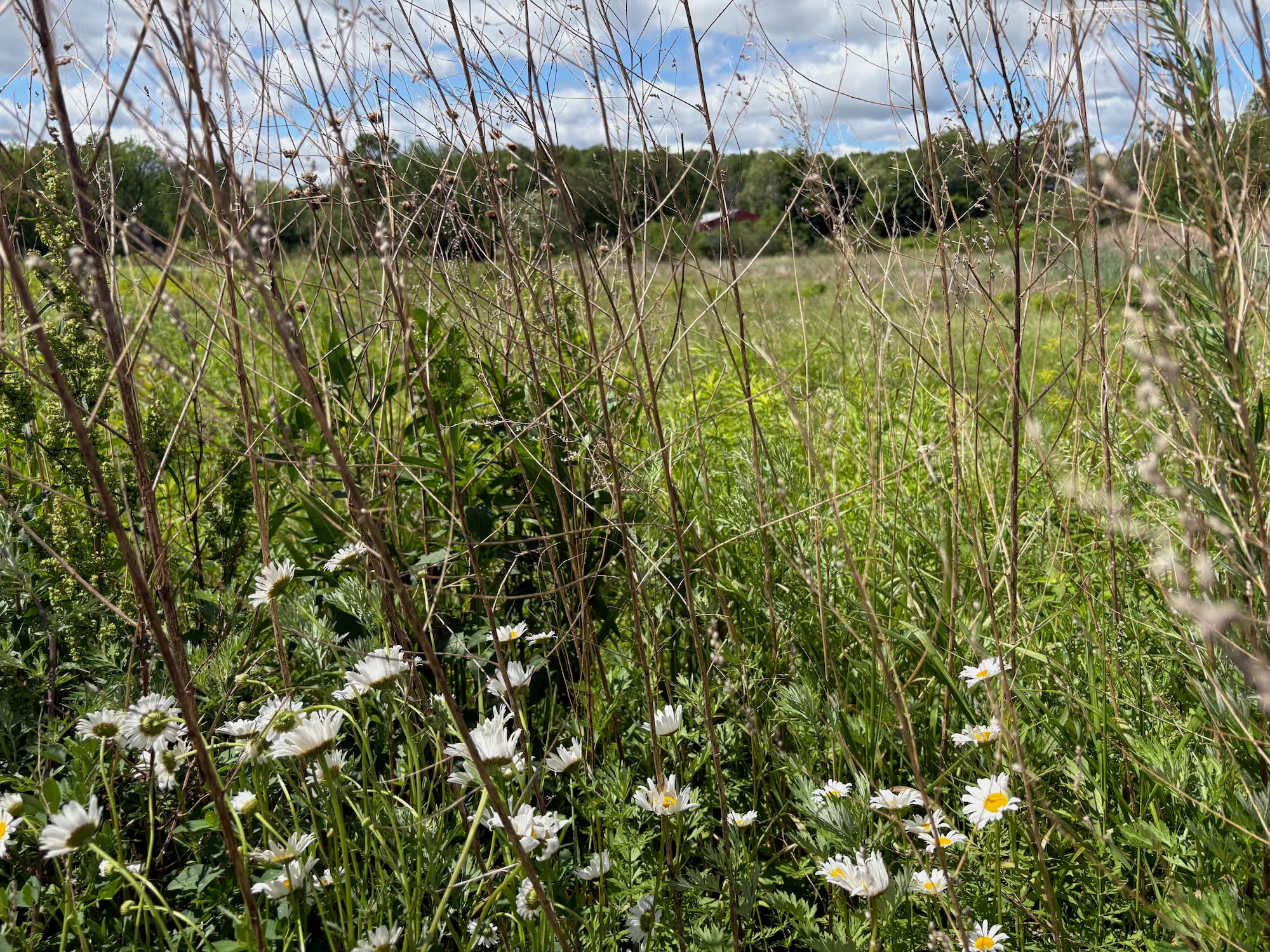
On a cool morning in late April, the pollinator meadow off Colby Farm Lane got a meaningful push forward thanks to a collaborative regional effort focused on habitat restoration.
Through coordination with Mass Audubon’s Joppa Flats Education Center and Parker River National Wildlife Refuge, seasonal restoration technicians joined local volunteers to remove invasive plants at the meadow, part of an ongoing effort by Pollinator PowerWorks and the Newburyport Conservation Commission to establish pollinator habitat.
The effort grew out of relationships built during regional biodiversity planning work connected to a state grant proposal. Nancy Pau, who works with Parker River National Wildlife Refuge and partners with a number of regional organizations, helped connect the restoration crew with the Colby Farm Lane project. Heather McIntosh coordinated the field staff participation through Mass Audubon’s restoration work in the Great Marsh.
The primary target was multiflora rose, a fast-spreading, thorny shrub that can quickly overtake open land and crowd out native plants that pollinators depend on.
Removing invasives is physically demanding work, but it’s an important first step in establishing healthy habitat. Clearing dense growth creates space and light for native plants to take hold over time.
A single day of invasive removal doesn’t complete the work, but it moves the project forward in a tangible way and reflects the value of regional partnerships supporting local conservation efforts.
Last weekend, Pollinator PowerWorks volunteers returned to the meadow to plant native species in areas cleared during the invasive removal work. The newly exposed soil was far easier to work with than the dense hay sod that typically needs to be cut through when establishing meadow plantings. The hope is that these plants will establish and begin competing with returning invasives over time.
We’re grateful to Nancy Pau, Heather McIntosh, the restoration technicians, and the local volunteers who contributed their time and effort to the project.
If you walk the site in the coming months, you may not immediately notice what was removed. But over time, visitors will begin to see what now has a better chance to grow in its place.
Article from the Jun 2, 2026 Newburyport Daily News.
